 Totally Rome
Street art in Rome
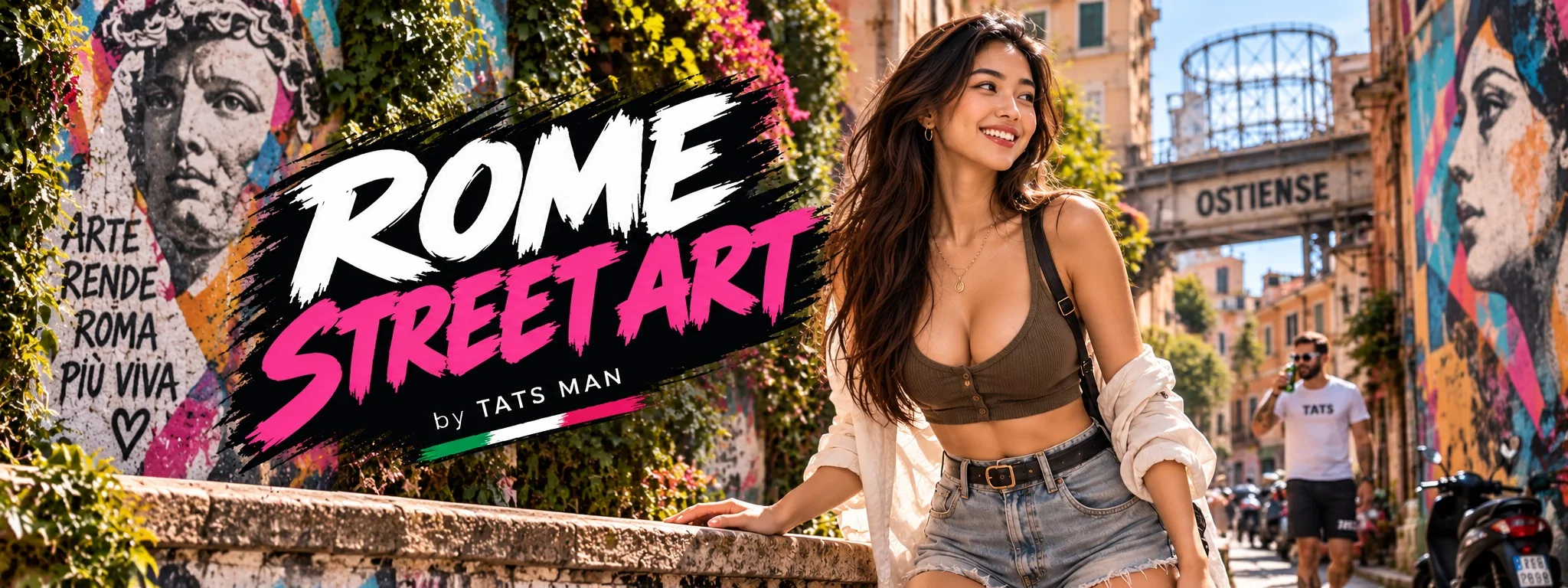
Beyond the ancient monuments — Rome has a genuine and growing contemporary street art scene.
Why Rome has street art
Alongside the ancient and Baroque city, Rome's outer neighbourhoods have developed a serious contemporary street art scene over the past two decades, with municipal support for large-scale murals in areas that had little cultural infrastructure before. It's a deliberate counterpoint to the historic centre — modern, political, unpolished.
Where to see it
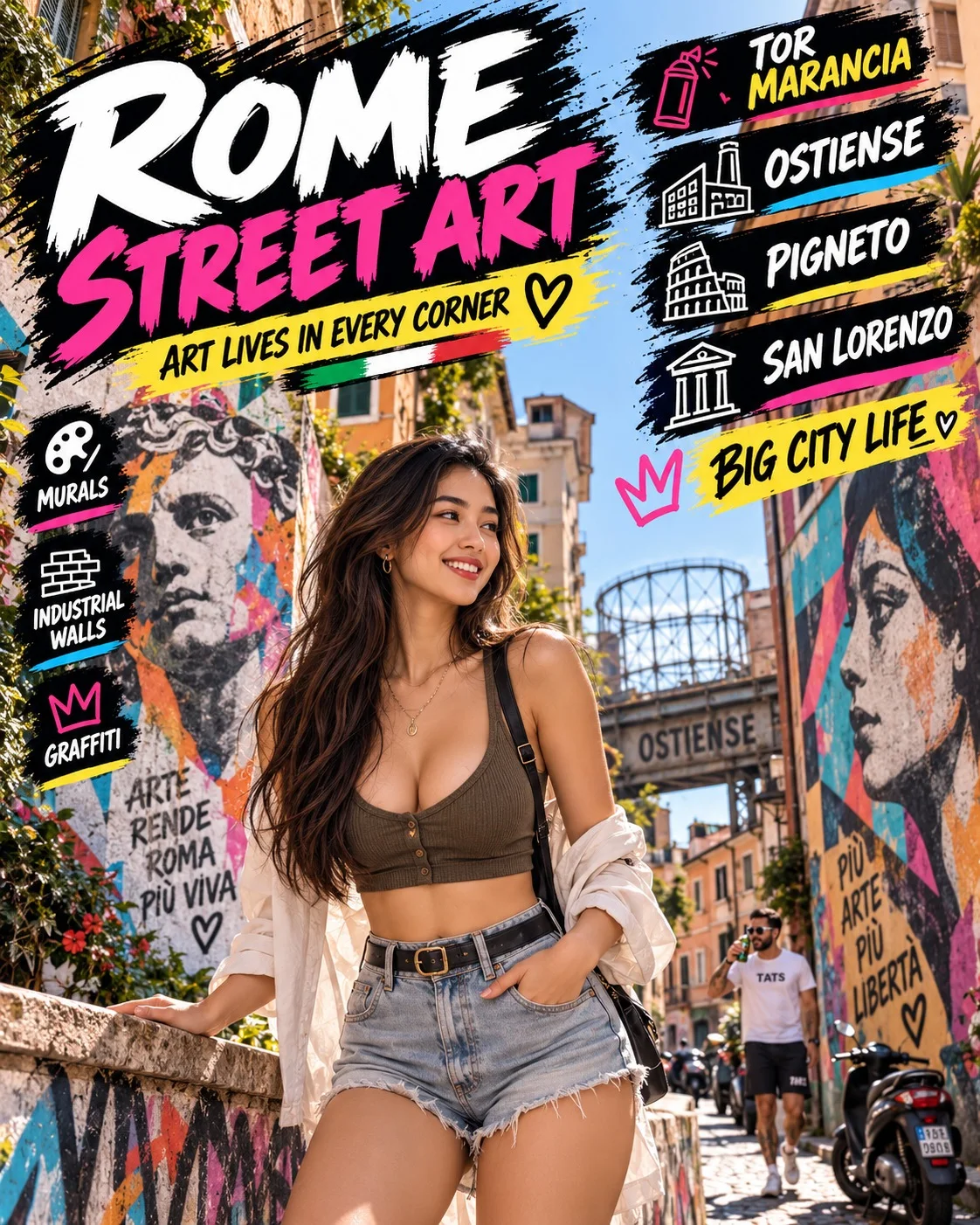
Tor Marancia (Ostiense area) hosts "Big City Life," a municipally sponsored project turning an entire public housing complex into a gallery of large-scale murals by international street artists. Ostiense itself has a dense concentration of work along its industrial-era buildings, including a massive mural by JR. Pigneto and San Lorenzo have smaller-scale but consistently active scenes.
How to visit
Self-guided walking is entirely possible with a mapped list of locations — the murals are outdoors, free, and photographable at any time. A handful of dedicated street art tours also operate, offering context on individual artists and the political/social themes behind specific works.
Legal versus illegal work, a genuine distinction
Some of Rome's most celebrated large-scale murals were commissioned through official municipal programmes with full legal permission, while other street art remains technically illegal, existing in a more precarious, temporary state — worth understanding this distinction if photographing or researching specific works, since legal status affects how long a piece is likely to survive.
Artists working internationally versus local talent
Rome's street art scene includes both internationally recognised artists (JR, among others) invited for specific large-scale projects and homegrown Roman and Italian artists building a more grassroots local scene — both categories contribute to the city's overall street art identity, though international names tend to draw more media attention.