 The Rome Index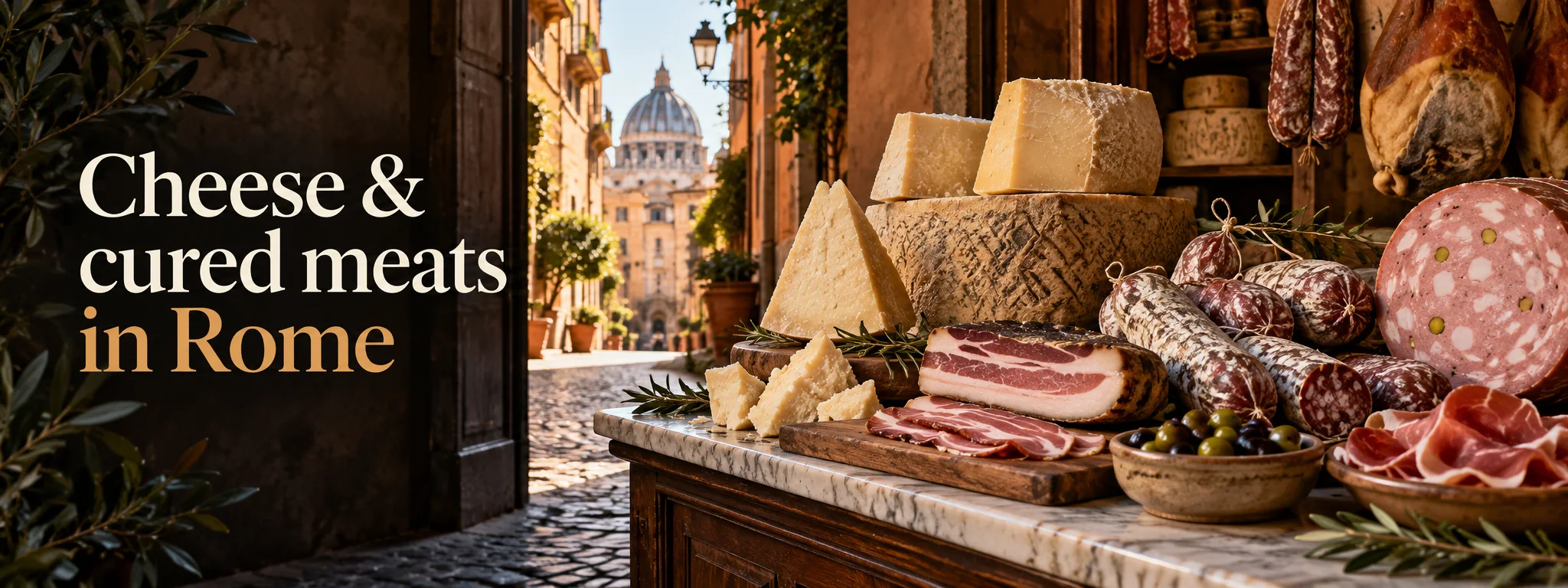
Cheese & cured meats in Rome
Pecorino, guanciale, mortadella — the products behind Roman cooking.
Pecorino Romano
The aged sheep's milk cheese that appears in cacio e pepe, gricia, amatriciana and carbonara — sharper and saltier than Parmigiano-Reggiano, which is never used in these dishes in their authentic form. True Pecorino Romano is PDO-protected and produced in Lazio and Sardinia.
Guanciale
Cured pig cheek rather than bacon or pancetta — what differentiates Roman pasta from imitations made elsewhere. The fat content is higher and the flavour more intense; substituting pancetta produces a different (still good, but different) dish.
Where to buy
A good alimentari (deli) or the Mercato Testaccio are the right places — vacuum-packed guanciale and Pecorino DOP travel well in checked luggage and make excellent food gifts.
Reading a salumeria counter
A good specialist shop will happily offer small tastes before you commit to a purchase — don't hesitate to ask, especially for unfamiliar regional products; it's standard practice rather than an imposition, and staff generally enjoy talking through what's on offer.
Weight and pricing norms
Cured meats and cheeses are sold by weight (per hundred grams, 'etto' in everyday speech) rather than by fixed portion — specifying a rough gram amount or simply asking for 'un etto' of something is the normal way to order a reasonable tasting quantity without over-committing to a full piece.
