 The Rome Index
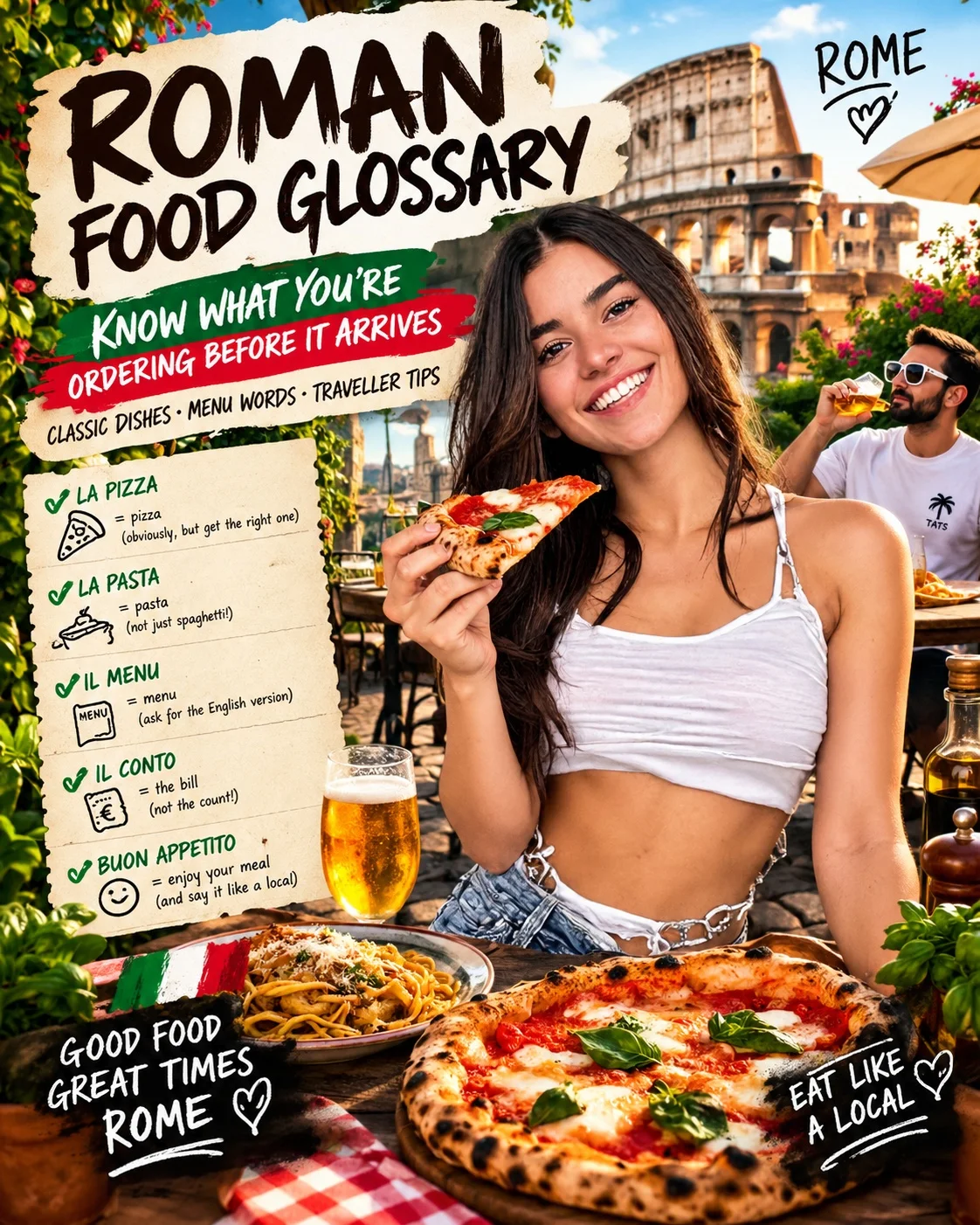
Roman food glossary
Every menu term worth knowing before you sit down to eat.
Pasta
Tonnarelli (square-section spaghetti, used for cacio e pepe), bucatini (thick hollow spaghetti, used for amatriciana), rigatoni (ridged tubes), paccheri (large tubes), mezze maniche (short tubes). Al dente means firm to the bite — the correct texture, not a preference.
Meat and offal
Guanciale (cured pig cheek), abbacchio (young Roman lamb), coda (oxtail), trippa (tripe), pajata (calf intestines), coratella (mixed offal), porchetta (boneless whole roast pig with herbs).
Vegetables and sides
Carciofi (artichokes), puntarelle (chicory shoots, a Roman salad staple), cicoria (bitter greens, pan-fried with garlic and chilli), fave (broad beans, seasonal in spring), vignarola (spring vegetable stew).
Useful menu terms
Antipasto (starter), primo (first course — pasta or soup), secondo (main — meat or fish), contorno (side dish, ordered separately), dolce (dessert), coperto (cover charge, per person, added to the bill). Fritto means fried, al forno means baked, alla brace means grilled over embers.
Menu abbreviations worth knowing
'q.b.' (quanto basta, 'as much as needed') appears on some handwritten menus for ingredients like salt or oil where quantity is left to the cook's judgement — a small detail that signals a kitchen writing its own menu rather than using a generic template.
Regional dialect terms that persist
Some Roman menu terms reflect the city's own dialect (romanesco) rather than standard Italian — 'ajo, ojo e peperoncino' (garlic, oil and chilli) is one common example, worth recognising even if standard Italian dictionaries don't immediately clarify it.